Monday, September 10, 2018


Do You Love baseball?
I was asked that question a few weeks ago. “Yes, of course I do!” was my response. Those of you who know me are thinking, “Right! You? Love baseball?” But I do. I do love baseball. My love for the sport extends far beyond favorite players or a team, beyond the athleticism and the statistics.

Through the years, baseball has always been there. There’s no escaping it! From watching Johnny Bench and the Cincinnati Reds on TV during the 70s, to having a Cincinnati Reds chaplain as a neighbor today, baseball has “followed me” and I am grateful for it.

I love what baseball represents, what it stands for, how it brings people together, and the memories and traditions it has helped create. If you’ll indulge me, I’d like to share the reasons why I love baseball.


Becoming Mrs. Tekulve


October 25, 1986—the day I married Buddy Tekulve. “Tekulve? Wasn’t there a pitcher in the 70s who had that last name?” Yes, there was, Kent Tekulve...and yes, Buddy is a distant cousin.
Let’s get back to October 25.

When we arrived at our hotel room that night, what was the first thing we did? Well, not what you’d expect newlyweds to do! We were so hungry! We ordered room service and watched the Mets and Red Sox duke it out in game six of the World Series. As Buddy and I sat on the edge of the bed, we devoured our club sandwiches and Cherry Cokes and witnessed Bill Buckner’s “between the legs” error! What a game! The Mets rallied for three more runs and won, 6-5, forcing game 7—which they won and ultimately the World Series.

Most couples celebrate their anniversary dining at a fine restaurant. For us, sharing a meal of club sandwiches and Cherry Cokes…and watching the World Series…has become a beloved anniversary tradition. And, I wouldn’t want to spend it any other way.

Children, Changes, and Making Friends

Columbus, Indiana is our hometown, and when our children were young, we watched the Indianapolis Indians’ play at Victory Field, which opened in 1996. We loved taking the kids there, daughter Katie, and son, T.J. Their favorite memory is meeting the San Diego Chicken.  I’ll never forget their faces as he hugged them and signed their plush San Diego Chickens…which they still have at ages 27 and 24.

Buddy’s work took him to Georgetown, Indiana and we moved to southern Indiana in 2000. His employer had seats at Slugger Field, another new baseball park! We enjoyed countless games with the kids, watching Jake the Diamond Dog and catching fly balls and T-shirts. We became friends with our attendant/usher Steve, who greeted us with a smile and handshake every time. When the kids brought friends with them, he would ask if it was their first time there. Somehow, he always managed to get a ball for them.

Buddy changed jobs in 2008 and we lost the seats between third and home. We continued to go to Bats’ games, by ourselves more and more as the kids grew older. Buddy always walked to section 120 to see if Steve was there, to say hello and shake his hand. When we were at a Bats game in April, Buddy asked our usher if he knew Steve. (We hadn’t seen him in a while.) When he told us Steve had passed away, it broke our hearts. He was dear to us—not because of what he did for us at Slugger Field. Steve was a smiling face and a friendly handshake that made a family far from home feel “at home.” He was (and is) a cherished part of our lives.

Older but Still Young-at-Heart


I miss having the kids at home; taking vacations together, going to Bats’ games as a family. But, it’s also nice to be a couple again! Our favorite vacations have included major league baseball games.  In 2014, we spent a much-needed weekend getaway in Cincinnati and watched the Reds at The Great American Ballpark. 

In 2016, I attended a conference in San Diego. “Fly out with me! We can go to Petco Park and watch the All-Star game!” was my suggestion. We went, had a blast, and even got our picture on the jumbo screen! (above)

We have a new vacation goal: to visit as many major league baseball parks as we can.

In 2015, we moved from the country to be closer to our workplaces.  One day, I was working in the yard, wearing a Cincinnati Reds T-shirt. I heard, “Hi, neighbor! You’re a Reds fan!” in a thick Hispanic accent. “I’m a chaplain for the Reds,” he went on to explain. 

Jose and Carol are wonderful neighbors. We discovered we have a lot in common: similar beliefs, values, and…baseball.  I admire what Jose does and is to so many players and their families!  He’s a minister, but he also administers to them.  He shares his home with countless Hispanic players and their families, giving them a place to stay as they try out for the Bats or are being called up to the Reds.  It’s an amazing thing to witness.

What’s in a Name?

A month ago, Buddy and I attended a show at Derby Dinner Playhouse. Though I don’t mind sharing a table with other guests, I usually like having it all to ourselves. As we were seated, I noticed the table was reserved for two more. I wasn’t in the best of moods and had hoped I wouldn’t have to make small-talk with anyone.

After getting our drinks, an elderly couple approached us, and the lady said in a soft voice, “Hello! I guess we’re sharing the evening with you two!” I presented my best smile and continued to sip my water.

As dinner progressed, my shield began to disappear. What a sweet couple! Wetta (Lowetta) Jenkins shared she and Charlie had been married for almost 56 years. She lovingly spoke of her children and grandchildren, but mostly doted on Charlie. She shared how he used to be the local radio sports announcer, but he'd lost his voice to Parkinson's Disease. When Charlie did speak, it was very quiet and strained. A few minutes into our conversation, Charlie looked at Buddy and asked, "What did you say your last name was?" "Tekulve," Buddy replied. "Like the pitcher, Kent Tekulve?" Charlie smiled back. Despite his strained vocals, it was as if Charlie was 10 years old again, talking about his favorite baseball player.

I'll never forget the night Buddy and I shared dinner and show...and heart-warming conversation with the lovely Lowetta and Charlie Jenkins. A name is just a name, but when it embodies greatness, it opens doors, can leave a lasting impression, and creates a bond that lasts far beyond an evening, a career, or a lifetime.

So, Why Do I love Baseball?

Baseball is intertwined in my life story. From my last name and wedding anniversary, cherished memories and vacations, to welcoming attendants, neighbors, and chance encounters, baseball is more to me than following a player or a team. It’s even more than a beautiful ballpark. It’s the people, how it joins them together, regardless of age, race, religion, culture, or economic status. 

I love baseball for what it stands for: family, hope, friendship, and opportunity.

That…is why I love baseball.

Wednesday, July 3, 2013

Necessary Endings, Necessary Beginnings


This past weekend, my pastor's message centered on Paul's good-byes to the elders in Ephesus who had become beloved friends. "Compelled by the Spirit" (Acts 20:22, NIV), Paul knew it was time to leave Ephesus and head for Jerusalem.  He left the comfortable, the known and familiar for the uncomfortable, the unknown, and unfamiliar. 

Being a weekend I served on the music team, I found myself more intent on playing keys with inspired passion rather than intentionally seeking to be inspired with George's passionate and spirit-filled words.  I knew what his message was about--about saying tough good-byes--which has been an all too-familiar occurrence in my life.  I hid behind the Kurzweil to avoid the tears, for I knew they would surely come once I was compelled by Spirit...I knew God wanted me to not only hear His words, but actively listen to what He wanted to tell me.

God, how is it you know what I need to hear and when I need to hear it?

In just seven weeks, I will be saying good-bye to my son (our youngest) as he leaves home--his comfortable, his known and familiar--for college.  How can this be??  When did he lay down his favorite plush Veggie Tales characters to pick up a laptop?  How is it he can read and write music better than I can?  And that red, Amish-looking beard...When did THAT happen?  My giggly, curly-headed, rambunctious, drink box-sipping 3-year old has turned into a 19-year old, 6' 3" witty, talented, tender-hearted man.  August 14th will definitely be a tough but necessary good-bye.  A necessary ending has to occur so that he can experience a necessary beginning.

Our almost 13-year old Siberian husky, Jenna, is nearing the end of her life.  Everyday, I am blessed by her familiar, comforting fur as she nudges me for another walk outside, regardless of how difficult and shorter the walks have become.  Her gentle disposition and striking blue eyes continue to greet me, but in my heart, I know her heart will one day give out....Each day, her necessary ending is becoming closer and closer. When that day comes, I know the tears will flow and my heart will ache as I say good-bye to her.  Her necessary ending will leave a huge void, but perhaps one day, a new four-legged beginning will enter our lives.

We all have experienced tough good-byes.  Whether it was leaving the only home you'd ever known, the death of a loved one or death of a relationship, or being fired from a job you really loved, each good-bye carries with it a tremendous grief, a broken heart, and memories which bring two-sided tears--tears of sadness for our loss, and tears of joy for the experience.

When saying good-bye to sin, to wrong decisions, to bad habits and wrong turns, we know that those necessary endings can lead to a better life and better beginnings.  In my tough good-byes, I have learned through God's love and discipline that each ending was necessary for my growth as a Christian.  He has taught me that it was through my tough and painful good-byes I grew stronger, more compassionate, and more mature in my Christian walk. Shouldn't that be our goal as Christians anyway?  To grow and become more like Christ? To show love and compassion to others? To share His message of truth and salvation? We desire and strive to be on that proverbial mountaintop, but fail to remember that every climb to the top begins down in the valley!  Our necessary endings in life can most certainly take us to unrelenting depths. But as Christians, we know that Christ's ultimate sacrifice- His necessary ending--had to occur in order for our glorious beginning in eternity!

As certain chapters come to a close and new ones are about to be opened, I know the good-byes will be tough, but I also know that the transition from old to new, from ending to a beginning, are necessary moments for me and for others.  As Paul told his friends in Ephesus, "However, I consider my life worth nothing to me; my only aim is to finish the race and complete the task the Lord Jesus has given me—the task of testifying to the good news of God’s grace" (Acts 20:24, NIV).

Wednesday, June 19, 2013

River of Sorrows, Mile of Pain


There never was a love so true

though time would not allow it

to grow despite the odds and fate;

still their passion did not quit.


A river of sorrows, a mile of pain,

their crossroads made them one.

Misguided, chained and longing for

the freedom to become.


Choices made them who they are

yet chance tried to bring change.

It's never easy to break away

but stay put in one place.


Is being content worth more than love?

Is true love worth fighting for?

A river of sorrows, a mile of pain,

a star to wish for more.


There never was a love so true

no hearts a stronger beat.

Though time has won its battle,

odds' war they can defeat.

Originally Written in March 2010

Friday, June 14, 2013

Schwinn-ing


On June 14th, 1972, I'm sure my day started out like any other girl's day would have. The calendar hanging by the wall phone in the kitchen told me it was Flag Day, but for an eight year old, unless there are presents, a day off from school, or a special family meal planned, it wasn't a real holiday.

My paternal grandparents had stopped by for a visit that afternoon, so in many ways the day was a special one, for they lived over an hour away.  I don't remember why, but my pap-pa wanted to go for a bicycle ride, which I thought was rather odd.  A grandpa on a bicycle?!  He was at least 60 years old!  Being pap-pa's girl, I decided I wanted to go, too.

What happened after we left our driveway is sketchy, but I do remember trying to keep up with him on my older sister's blue Schwinn...pedaling and swerving on unrelenting gravel.  My next memory was waking up on the scratchy green shag carpet in our living room, wondering why everyone was looking at me!  The right side of my face was burning, and I couldn't see very well.  Was that my mom peeking around the corner?  "Mommy...Mommy..." I cried out for her, but she disappeared.  Why didn't she come back?  Luckily, my sister Renita was there to comfort and console.

I was rushed in our Impala to our family doctor and received stitches above my right eye.  I wanted to go home, but the doctor suggested x-rays at the county hospital.  So I endured another car ride and pain as I lie on a cold metal table to make sure nothing was broken.  Bandaged and bruised, I finally arrived home.  Restless nights, countless bandage changes and ointments, I thought my summer was ruined! (My mom was concerned my face was "ruined.")  Weeks went by, the bandages came off, I endured and healed, and even rode a bike again...all before I entered third grade in August.

On Flag Day, on every June 14th, I can't help but recall "my bicycle accident."  I can barely see the scars on my right knee and right side of my face, as age and wrinkles have become life's best concealer. But I know they're still there.

Looking back as an adult on my bike wreck, I'm grateful for the experience as it has been life-lesson material for me and many others I've shared the story with. Like any traumatic experience, the pain and the memories do not completely go away. 

We may be able to offer forgiveness to someone who has hurt us deeply and eventually pedal on through life, but we may never be able to forget the pain. True, I could have stayed behind and not ventured out with pap-pa that day.  And there are other gravel situations in life that could have and should have been avoided.  But I realize now that without them, I would not appreciate the good, the smooth, and the paved times in my life.

I'm Schwinn-ing today, much like I was 41 years ago...ready to take on pavement or gravel, possible pain and scars, uphill or downhill, as I continue on this ride.

Wednesday, March 6, 2013

It's Been a Long Time Coming

Learning online has become a way of life for me.  Now that it's coming to an end, how will I occupy my time?  Will I be fortunate to enter the career I'm hoping for?  Will my college degree help open doors?  Will my investment in time, hard work and sacrifice pay off?

So many unknowns, so many unseens...I feel like I'm back where I started before I began this educational journey...

But that's what life is--a journey.

We don't always arrive where we want to go, when we want to get there, and with whom we want to get there with.  I've experienced all three...as I'm sure everyone has to some degree.  Life is not planned out like a map; we make our own map as time leads us here and there, hoping we'll eventually end up where we're supposed to be--and the journey will have been worthwhile.

Life's little detours...moving, financial stress, death, marital problems, job loss, depression...I've known these, too.  I've also known joy, contentment, peace, forgiveness, and love.

So, now that I'm three days away from finishing my BA in Communications, I'm wondering, "Was it worth it?"  What is a college education worth these days, anyway!? Does it really increase a person's net worth or self worth? 

What am I worth?

I feel "accomplished" and know that my online learning has been a wonderful journey.  But my education is not over, for I've not yet completed my journey.  Perhaps I'll start law school, start my own HR consulting firm, or pursue a Masters degree in Political Science or Psychology...

God, where are we going next?

I'm ready to learn more...I'm ready for the next journey.

https://ottawau.blackboard.com/courses/1/LAS-45012-SP-2013-OB/db/_2524011_1/my%20educational%20journey-R.Tekulve.ppt


Friday, June 22, 2012

Final Thoughts...


 Intercultural Communication
is more than communicating with people of a different culture; it is understanding the complexity of the human spirit, appreciating the diversity of God's world, and knowing that every human possesses the desire to be heard and understood...and that every human has the capacity to love.

Galations 5:13-15 NIV "For you have been called to live in freedom, my brothers and sisters. But don’t use your freedom to satisfy your sinful nature. Instead, use your freedom to serve one another in love. For the whole law can be summed up in this one command: Love your neighbor as yourself."

Martin Luther King, Jr. "We must come to see that human progress never rolls in on wheels of inevitability.  It comes through the tireless efforts and persistent work of men willing to be coworkers with God, and without this hard work, time itself becomes an ally of the forces of social injustice." - Letter from Birmingham Jail, 1963.

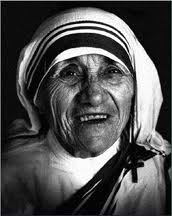
Mother Teresa "If we have no peace, it is because we have forgotten that we belong to each other."

Living and Loving as Community


Introduction
            Technology and travel has allowed many intercultural opportunities in our workplace, in our schools, in our places of worship—in every interpersonal interaction within our communities.  As our world expands, so must our perspective and acceptance of diversity.  Our ability to be effective and efficient communicators within every cultural context is imperative. “If enough of us are willing to weave webs of connection with others, all our shared hopes for the world can be realized.  Long-standing stereotypes can be dissolved, mistrust can be overcome, understanding can be achieved, people previously at odds can work together on shared objections, new levels of creativity can be reached, and bonds of community can be strengthened” (Wilmot & Hocker, 2011, p. 32). The following questions and prompts will be explored as this student of intercultural communication transforms to one who lives and communicates better with those around her.
The Destructive Nature of Discrimination
            Indentify and explain the interpersonal, collective, and/or institutional discrimination. Discrimination, which is behaviors stemming from stereotyping, or prejudice, is manifested in the “overt actions to exclude, avoid, or distance oneself from other groups” (Martin & Nakayama, 2011, p. 60).  Broken down according to context, discrimination can be interpersonal, displayed in one’s stereotyping, unfair treatment of individuals or group(s), or verbally in derogatory, hate-filled language.  Hate speech displays human discrimination at its worst, intentionally used to “degrade, intimidate or incite violence” (Martin & Nakayama, 2011, p. 60).  Interpersonal discrimination can also be non-verbal, as was evident during the turbulent civil rights movement period.  Segregated and banned from “white” public places, blacks, especially in the southern states, suffered great prejudices and injustices.  In the eyes of many, including Dr. Martin Luther King, Jr., those who do nothing or say nothing against racism or discrimination help further the injustice. “We will have to repent in this generation not merely for the vitriolic words and actions of the bad people but for the appalling silence of the good” (King, 1963, p,. 4). Destructive and detrimental to everyone, discrimination—either verbal or non-verbal, prevents the possibility of forming a positive, intercultural relationship that would benefit individuals and his/her society.
            In the collective or institutional context, discrimination may take place in an informal or formal way, but still denies an individual or group equal rights, or unbiased activity within a collective group or organization.  Workplace discrimination would be an example of collective or institutional discrimination.  In our text, Martin and Nakayama report that in low-wage, entry-level job markets, stereotyping and race discrimination still exist and are considered a huge road block, especially for young black men (Martin & Nakayama, 2011, p. 61).  Affirmative action may not be strictly adhered to, with employers conducting quick applicant screenings, looking for traits that make the applicant seem suited for the job. “Stereotypes among young black men remain so prevalent and so strong that race continues to serve as a major signal of characteristics of which employers are wary” (Martin & Nakayama, 2011, p. 61).  While stereotyping does help form distinction and definition in our relationships with others, these false concepts over a period of time are not easily changed.  To eliminate discrimination, overcoming stereotyping is a necessary goal. In order to accomplish that, so we may foster more rewarding intercultural relationships, our goal should be to “work consciously at rejecting them…by utilizing these two steps: 1) recognizing the negative stereotypes, and 2) obtaining individual information that can counteract the stereotype” (Martin & Nakayama, 2011, p. 57). 

Pop Culture and Identity
            How do the choices we make about popular culture influence the formation of our cultural identity?  Because “…popular culture plays a very important role in how we understand the world, helping us reinforce our sense of who we are and confirming our worldviews” (Martin & Nakayama, 2011, p. 200), our identities are greatly formed and influenced by popular culture.  Traditionally, popular culture has been defined as being forms of media such as film, television, videos, and magazines.  With the introduction and growth of the internet, social media web sites, and digital and mobile devices, today’s pop culture has not only expanded in definition, but in its global implications and shared identities!  Americans’ identity, for instance, is no longer bound by a geographical border.  The daily choices we make in what we wear, what car we drive, which television show to watch, what music we listen to, etc., do form and shape our identity as individuals, but also collectively reflect our identity as an “American.”  The culture we as Americans consider “popular” is then associated with the American identity, especially by other cultures and by other countries. “Today American goods and services such as McDonald’s and Levi’s have much appeal to ordinary people in Russia and China, because of their strong  connotations of “freedom,” “casualness,” and “non-restrictiveness,” and more generally positive fantasies about the “American Way of Life”” (Van Elteren, 1996, p. 72). 
            Popular culture can form an identity for countries and individuals according to what is popular in today’s culture, but also can serve as an identity regardless if the time is now or in the past.  In the movie, “Gran Torino,” Clint Eastwood’s character, Walt, was defined by popular culture from an era with which he identified.  Popular culture that clearly gave Walt his identity included his Pabst Blue Ribbon beer, his old push-blade lawn mower, and especially his most prized possession, his 1972 Gran Torino. “To Walt, the Ford beauty represents what was, what was great, and the culture of both his and the car’s heyday” (Tekulve, 2012, p. 4). Our popular culture choices—those things we embrace and those we reject—form our identity and communicate to others what is important and valuable in our lives.
Intercultural Communication Conflict and Attitude
            How might attitudes toward work lead to intercultural communication conflict?  With the workplace being the most likely place to encounter cultural differences, conflict is inevitable, with a person’s attitude being a small portion of the underlying reasons for conflict.  Attitudes and behaviors regarding a person’s work ethic and culture are directly related to his/her ethnic background, beliefs, and values.  For instance, the U.S. culture is considered individualistic—placing emphasis on the importance of individual job performance and responsibilities (Martin & Nakayama, 2011 p. 312).  In the Japanese collectivist work culture, however, “organizations do not necessarily define the precise job responsibilities assigned to each individual; rather, it’s the job of a work unit, a section, or a department” (Martin & Nakayama, 2011, p. 312).  These differences can be a challenge to both the workers and to management.
            Another cultural difference in attitude that affects the workplace is the concept of time. Many international business negotiations could suffer or even fall apart if the conflict of time orientation is not approached and addressed.  Polychronic orientation, which views time with a less constrictive, precise beginning and end manner, is the attitude of many European countries and businesses (Martin & Nakayama, 2011, p. 182).  Monochronic orientation, which the U.S. adheres to, views times “as a commodity: Time can be gained, lost, spent, or wasted” (Martin & Nakayama, 2011, p. 182).  Misunderstandings between people with different attitudes and concepts of time, what is appropriate business etiquette, styles of communication (direct or indirect), gender roles in business, and political and/or economical implications can be significant intercultural hurdles.  The best attitude for anyone to employ in the workplace is the attitude of respect.
Savvy Intercultural Communication
            Describe your plan to become more inter-culturally savvy in communication.  Hearing about the experiences of people who are different from you can lead to different ways of viewing the world” (Martin & Nakayama, 2011, p. 23).  For me, the most important element of communication is not speaking, but in listening. So, as I consider the ways I might improve my intercultural communication skills, my observations—taking in the verbal and non-verbal cues and my surroundings—before speaking will become even more important. Being receptive and respectful of other people’s cultures is important, no matter what the situation, place, or culture.  “The effective intercultural communicator, sensitive to the other person, listens carefully before speaking.  He or she hears the message from the other person, considers it, then reconsiders it, trying on different possible interpretations—trying to understand the speaker’s possible intent” (Martin & Nakayama, 2011, p. 23).
            Being savvy in communication with other cultures also requires engaging in mindful and meaningful communication by considering the personal and cultural history that has been his/her influence,  and by wearing a different “lens” of perspective to understand his/her view of the world we both share.  The lens model of perspective specifies that we each have a view of ourselves, the other person, and the relationship (Wilmot & Hocker, 2011, p. 56).  Learning to look at the world differently requires that I step beyond my normal, beyond my comfort zone.  “Changing our usual behavior, learning to “do what comes unnaturally,” requires an examination of one’s most deeply held values and spiritual beliefs…If people are to survive and thrive, working together is not an option but a necessity” (Wilmot & Hocker, 2011, p. 32).  Taking on this new perspective and applying it in my everyday intercultural interactions will equip me for mindful communication, meaningful relationships, and opportunities in becoming an advocate for other culture’s voices to be heard, understood, respected, and accepted.
Bridging the Communication Gaps
            Is it possible for two people to communicate effectively if they don’t speak the same language? How?  “Growing trends towards globalization of U.S. firms and immigration to the United States absolutely make body language more important as a universal language” (Shepherd, 2007, p. 1).  Non-verbal cues such as eye contact, facial expression, and gestures—forms of body language—not only reinforce a person’s verbal language, but can act as communicators by themselves.  If I found myself unable to understand what a person was speaking, body language would help us communicate with each other. Simple gestures understood in the U.S. such as a handshake, a wink, maintaining eye contact, and even a kiss, however, can take on different meanings in different cultures. “Culture and context are essential to reading body language, just as they are in verbal language.  You cannot hope to read body language well unless you take culture into consideration” (Shepherd, 2007, p. 1). Just as in verbal communication, the importance of observation and being cognizant of the other’s culture is essential to effective communication.
Conclusion
            For you have been called to live in freedom, my brothers and sisters. But don’t use your freedom to satisfy your sinful nature. Instead, use your freedom to serve one another in love. For the whole law can be summed up in this one command: “Love your neighbor as yourself”” (Galatians 5:13-15, NIV).  For me, this Bible verse sums up the very core of intercultural communication.  Our love, compassion and acceptance of others is not exclusive for those we know or understand, those in our own “culture,” but for those who believe different than we believe, whose skin is different than our skin, and whose world views are different than ours.  Whether from another country, or simply from another neighborhood down the street, every human life possesses the same desire to be heard and understood.  It is my hope that I will not only learn to be a better intercultural communicator, but one who also forms meaningful relationships and coalitions with others.  “We must come to see that human progress never rolls in on wheels of inevitability.  It comes through the tireless efforts and persistent work of men willing to be coworkers with God, and without this hard work time itself becomes an ally of the forces of social stagnation” (King, 1963, p. 4).
   . 
References
Galatians 5:13-15.The Bible; New living translation. Bible Gateway.
            http://www.biblegateway.com/passage/?search=Galatians+5:13-15&version=NLT
King, M. L. (1963, August). The negro is your brother. The Atlantic Monthly, 213(2), 78-88. Retrieved from http://web.cn.edu/kwheeler/documents/letter_birmingham_jail.pdf
Martin, J., & Nakayama, T. (2011). Experiencing intercultural communication: An
            introduction. (4 ed.). New York, NY: The McGraw-Hill Companies.
Shepherd, L. (2007). Reading body language can offer insight to HR pros. Employee
            Benefit News, 21(6), 22.
Tekulve, R. (2012). Gran Torino Film Analysis.  A reflection of cultural conflict and
            redemption, 1-8.
Van Elteren, M. (1996). Conceptualizing the Impact of US Popular Culture Globally. Journal of Popular
            Culture, 30(1), 47-89.
Wilmot, W., & Hocker, J. (2011). Interpersonal conflict. (8 ed.). New York, NY: The
            McGraw-Hill Companies, Inc.

Wednesday, June 20, 2012

Reaching Out When the Barriers Are Too Great

 This is Rhoda...
 She walked five days to Yida (South Sudan) with some neighbors to join her mother, Sarah, who had arrived earlier. Thankfully, she was safely reunited with her mother, and her 23-day-old sister, Kua. Rhoda’s father is a soldier in Nuba.
Read about the November, 2011 bombing of her refugee camp:
http://www.samaritanspurse.org/index.php/articles/support_for_south_sudan_refugees/?utm_campaign=Argyle+Social-2011-11&utm_medium=Argyle+Social&utm_source=General+Use
She received immunization, registered as a refugee, and received food rations from Samaritan’s Purse, an international, Christian disaster relief organization.
I don't know Rhoda, nor will I probably ever meet her.  If I could communicate with her, what would I say, how would I say it?  Would she understand me?  A face with a name, a precious life and child of God--she deserves to be loved, respected, nurtured and protected. 
She and her family live very distant from me--distant in miles and very distant in culture. 
When our compassion cannot reach those in need, when great physical and cultural barriers exist, how do we communicate our hopes, our desires, our love for them?
Click here to see a new report and video about the influx of refugees: http://spsocial.org/Bff

Tuesday, June 19, 2012

A Shared Multicultural and Authentic Afternoon

 Our small community has become multicultural and quite diverse in the last ten years, thanks to those who have lovingly shared their ethnic foods with us.
And thanks also goes out to my son who will be 18 in a few weeks. Because of his big appetite, our family has enjoyed restaurants that we may not have been "brave" to try otherwise!  Although my husband is not fond of Mexican cuisine, he will indulge the rest of us and treat us out at our favorite authentic Mexican restaurant, El Nopal.

  Just a few weeks ago when school had let out for the summer, our son and I went clothes shopping. (This 18-year old who loves to eat also tends to grow...)  I looked at my watch and realized it was almost noon, and knew this big kid was getting hungry.  As if he read my mind, he said, "You  know what really sounds good?  Mexican food...You want to go to El Nopal?"  With dad not there to object, I agreed.  You never seen a kid smile so big so fast...

Our mother-son outting turned out to be quite a fun afternoon.  As we ate our free chips and salsa before our entrees arrived, we laughed (quite loudly) as we talked about band camp, his senior year at high school, what colleges he likes best so far...and even exchanged a few "that's what she said" jokes.  We laughed and we ate...and ate, and...ate.  By the time we were finished, neither of us wanted to drive home, for fear we'd fall asleep at the wheel...A genuine Mexican fiesta followed by a food-induced siesta!

I've thought about that afternoon quite often, realizing that our fun could have been at any restaurant, but the ethnic atmosphere, the hospitality, and the authentic food helped make it even more special.  We shared our love of Mexican food together, but more importantly, we shared time together.  Moms and dads: you need to share more time with your children, for soon, they will be in high school, driving, thinking about college and growing out of their clothes.  Soon comes all too soon...

Thanks, El Nopal, for allowing us to enjoy an authentic afternoon.

Sunday, June 17, 2012

By His Stripes, We Are Healed--Faith and Modern Medicine

  In our discussion on culture and modern medicine this week, some conversations and thoughts swayed to those who refuse modern medicine--
either because their culture is unaware of the science behind the medicine, or because their culture is aware of the science behind the medicine, and claim their Christian faith alone can heal.

I was already aware of certain religions that prohibit any use of modern medicine, doctors, hospitals, etc., but my opinion of their beliefs stemmed from the "secular world" perspective, and not as a Christian.  Though I do not believe our loving God, our Father, would want want us, his children, to suffer needlessly, I do wonder if we as "modern Christians" put more faith in modern medicine than we do in God's immeasurable strength and power as our Healer...

If we cut our finger, most of us reach for a Band-aid and an antiseptic.  When we have a sore throat, we reach for throat lozenges, pain relievers, vitamin C supplements, or gargle with warm salt water, and know to call a doctor "if the pain persists."  If a Christian, when do we stop and pray for healing during our "reaching process?"  Have we forgot how to reach out to God?  Do leave God out of our small pain, cuts, and bruises, and only invite him to take over when a big illness or disease attacks us? 

Were our mothers only concerned about our broken legs and high fevers when we were young? or did they kiss our small cuts and boo-boos, too?

As a Christian, I believe God desires to be there for us, no matter how small our boo-boo, or how big the disease, as in the big "C."  Our ignorance of His healing power is on the brink of becoming equal to the cultures who are ignorant of medicine's healing power.

Should I suffer a sore throat or cut this week, I will still reach for the medicine cabinet.  But, with this renewed perspective of what my God can do, I will reach for His loving hand and healing touch for my ultimate healing.

Wednesday, June 13, 2012

Ten Days, Seven Years Ago...

(Schloss Neuschwanstein, with daughter, Katie) 

The title sounds like the beginning of Lincoln's Gettysburg Address...

But no, I was actually referring to my "Germany in Ten Days" EF Tours trip in July of 2005.  I can't believe it will be seven years!  I know years from now I will still reflect on my trip and say, "I can't believe it's been 20 years..."  Hopefully, I will remember the wonderful time I had there, the people I met, the experiences I had--the history, the scenery, the food and most of all, the rich culture of Deutschland itself.

While there, I never really saw myself as a tourist, though I'm sure I was identified as one as I walked the cobble streets of Heidelberg... 


I'm sure my slow, somber walk through the halls of the Dachau "Work Camp" memorial gave me away...

My constant companion--my camera, was surely a sign that I was not from wherever it was I was visiting...


And, I'm almost positive my bus and U-Bahn travel companions were aware that I must be just passing through...

But I didn't feel like a tourist.  I felt like I was home.

I know that sounds strange, but Germany and I had a strong connection, a bond, an immediate friendship that will last a lifetime. When I arrived back home in the states, I felt "homesick."  I felt like turning around and driving back to the airport to board a plane that would whisk me away as quick as I could say "schnell!"  While I'm sure there MUST be some name for this "syndrome," I know the fondness I had and still do, is largely attributed to attaining a personal goal of traveling to the country of my ancestry. 

I did it.

I was actually there!

Someday, I hope to return to Germany and become more "intimate" by visiting areas specific to my heritage.  Until then, I will look at my photos, watch the videos, and recall the time in 2005, I toured Germany in ten days...

It seems like a lifetime ago...or was it?

Sunday, June 10, 2012

Gran Torino Analysis- A Reflection on Cultural Conflict and Redemption

Introduction
            The 2008 movie “Gran Torino” starring Clint Eastwood is filled with an abundance of cultural diversity, which is met with much resistance, stereotype, and prejudice by the movies’ main character, Walt Kowalski. Walt’s world is changing; his wife dies, his Detroit neighborhood is decaying, his relationship with his sons is distant, and his Korean War memories continue to destroy his ability to fully enjoy life. Through an unlikely bond with the Hmong children next door, Walt finally receives redemption by coming face-to-face with the same destructive prejudices consuming neighborhood teenage gang members that have consumed him. By analyzing this complex and stirring portrayal of intercultural conflict, one can apply the movie’s message to better reflect on and redeem their own lives
Identity Crisis
            After the funeral service for Walt’s wife Dorothy, young Father Janovich informs Walt of some promises he made to Dorothy—that he would look after Walt, and make sure he goes to confession.  In the scene, “I confess,” Walt and the Father do not see eye-to-eye on these promises the Father intends to keep.  Not only does Walt mock the priest with his on-the-spot confession that he “never really cared much for church…and I only went because of her” (Eastwood, 2008), but Walt further insults him by saying he wouldn’t confess to a boy just out of seminary.
            The obvious cultural differences of identity, specifically age and religion, cloud both Walt’s and the Father’s perception of each other.  Their cultures are stark in contrast, which makes for difficult conversation. “(And) our communication is probably most successful when the person we are talking with confirms the identity we think is most important at the moment” (Martin & Nakayama, 2011, p. 92)  Clearly, Walt does not think Father Janovich is credible due to his age and his religious culture of Catholicism, therefore, his dedication to his deceased wife carries no weight. Though the Father’s religious culture/beliefs makes him more tolerant and less critical of Walt’s insulting behavior, he is unable to understand how a supposedly grieving husband could deny his wife her last wish.
Language Barriers
            Language is cultural, but it is not always defined entirely by ethnicity or race. The impact of one’s own generation, family histories, society, and values impacts the culture of language. “Even when people speak the same language, there can be differences in communication style and language use” (Martin & Nakayama, 2011, p. 150). One can assume that Walt’s racial, prejudiced, and stereotyped view of the world reflects his generation, his military career and involvement in the Korean War, and his factory environment at the Ford plant.  His culture of language, albeit offensive, creates a cultural divide within his own family. Though he and his family speak the same language, their inability to communicate inter-culturally creates dysfunction, as shown in the scene “Unhappy Birthday.”
            Walt’s oldest son and his wife bring birthday gifts for Walt they think are thoughtful and will make Walt’s life “easier.” Entirely out of touch with Walt and his goals and values, the gifts and retirement home suggestions are rejected, as is their presence. “No one can say we didn’t try” (Eastwood, 2008), but the audience knows better.  Had they been more perceptive years ago about Walt’s communication/language culture, their presence would have been the best gift of all.  Our perspective, our “lens”—that is, how we view life and others, is unique. Taking all that into consideration when interpersonal conflict occurs, we need to “make more accurate attributions and meaning of others’ behavior, we need to translate, interpret, and become fluent in several different “conflict dialects”” (Wilmot & Hocker, 2011, p. 68).
            A similar cultural conflict within family resulting from “language barriers” takes place in “Chill with Us,” when Tao Vang Lor is confronted by a Mexican gang while walking on the streets near his home.  Tao’s cousin and his fellow Hmong gang members come to his rescue, insisting Tao ride with them as repayment.  Tao understands his cousin—in both English and Chinese, but their cultures are extremely different.  Tao does not “understand” his cousin’s gang culture, and therefore, does not understand the value in his words, “Chill with us, man” (Eastwood, 2008). “Value conflict, a more serious type, occurs when people have differing ideologies” (Martin & Nakayama, 2011, p. 228).  In addition, “values are deeply felt beliefs that are shared by a cultural group” (Martin & Nakayama, 2011, p. 41), and Tao did not see the value in his cousin’s words, or his gang culture. 
Cars, Music and Beer
            Most popular culture is thought to be media-based, such as the “media outlets of television, music, videos, and magazines that most of us know and share” (Martin & Nakayama, 2011, p. 201).  While this is true, there are many other forms of popular culture.  Cars are an important pop culture symbol, in that they symbolize “how we understand the world, helping us reinforce our sense of who we are and confirming our worldviews” (Martin & Nakayama, 2011, 200).  In the movie, “Gran Torino,” the actual Gran Torino in the film serves two popular cultures—representing Walt’s 1972 culture, and the current Hmong gang culture.  To Walt, the Ford beauty represents what was, what was great, and the culture of both his and the car’s heyday.  “Ain’t she sweet” (Eastwood, 2008) comments Walt about his prized possession.  Seen as a possession they would like to have, the gang members agree, “Yo, it’s in mint condition, man” (Eastwood, 2008). 
            The white Honda driven by the Hmong gang is also a form of popular culture.  Modified, spoiler on the back, complete with a boom box, the gang’s identity and power is exemplified in everything the car provides them.  “To be made into popular culture, a commodity must also bear the interests of the people” (Martin & Nakayama, 2011, p. 202).  The car’s boom box could be considered a separate popular culture, as well as the hip-hop/rap music the gang plays.  Hip-hop or rap music stereotypically contains obscene language, promoting violence and crime.  “Gran Torino” does not stray from this stereotype and the music heard booming from the gang’s car portrays what is popular with gangs and therefore, is considered part of this Hmong gang’s popular culture.
            Consumables are a form of popular culture, reflecting status, personal taste, and culture.  The brand of beer a person drinks is considered a popular culture symbol of their social and economic class.  Walt’s preference for Pabst Blue Ribbon beer tells us that he favors the regional flavor of Milwaukee, Wisconsin, and the beer displays his preference for the 1970’s culture once again, as Pabst’s popularity seen its peek during that era.  Later in the movie, Walt’s “popular” preference for Pabst must be replaced with Heineken while at his Hmong neighbor’s house.  But he is fine with their preferred brand, for it is after all, beer. 
The Only True Way
            In real life, “the number of Hmong gangs and the level of their criminal activity is increasing in severity” (Straka, 2003, p. 1).  As was depicted in “Gran Torino,” Hmong gang members in real life use rape to be vindictive toward “their kind” who shuns them (Straka, 2003, p. 1).  The victims rarely come forward, for the gang members are usually family, have guns, and threaten to kill them and/or their families if they go to the police.  There are also cultural reasons why Hmong gangs use this kind of violence; “After the victims were raped, they feared being shunned by members of their families who now would consider them "damaged" or having "shamed" them. This reaction stems from the Hmong culture, which values virginity before marriage. If a girl is raped, others in the Hmong community may look down on her” (Straka, 2003, p. 1).  Reflecting on these real-life statistics is important when considering the alternatives to resolving the violent conflict in “Gran Torino.” 
            To engage in effective intercultural communication, one needs to “fully understand intercultural conflict…we need to look beyond individuals who may be in conflict” (Martin & Nakayama, 2011, p. 238).  The social, political, economic and cultural forces that are “beyond” those individuals are powerful and resistant to change, and Walt knew that. He had lived a life resistant to change. He also knew he spoke the gang members’ language—violence, and could “communicate” on their level.  Exploring other, less violent communication alternatives to create a constructive rather than destructive end to the conflict could have been carried out had Walt and his Hmong neighbors joined forces to confront the gang. (He was, after all, considered a “hero.”)
            Perhaps strength in numbers would have been the answer—the gang confronted, caught, and contained by a different kind of gang—a peaceful gang, their neighbors “ganging” up on them. For any kind of social change to occur, there needs to be a social movement. “…social movements need confrontation to highlight whatever perceived injustice is being done and to open the way for social change to halt the continuation of this injustice” (Martin & Nakayama, 2011, p. 240).  Walt was successful in his non-violent communication with the gang in the end, the gang was caught, and Tao and Sue were safe. But did real, lasting social change occur because of Walt’s one-man efforts?
Final Analysis and Conclusion
            “In the Chinese language the character for conflict is made up of two different symbols: one indicates danger whereas the other indicates opportunity” (Wilmot & Hocker, 2011, p. 9).  How fitting that is, given the Chinese/Hmong cultural theme of “Gran Torino” and that the movie represented both!  Violence and offensive language are rarely contents I look for in a good movie, but this movie proved to be an exception.  I was able to look past the guns, the violence, the vulgar language (and the bad acting) and view the movie with a different perspective—which is what we are called to do when in an interpersonal, intercultural conflict.  The characters well-developed portrayal of real-life Hmong gangs specific to the northern lake states such as Michigan, Wisconsin and Minnesota helped give more meaning to the film’s message.  
            A peacemaker by nature, wanting everyone to “get along,” I identified with Sue’s character the most.  She was the unassuming, brave, and a kind spirit who helped Walt on his journey back to knowing more about life, rather than knowing more about death. She was the bridge for many cultural and communication gaps. Walt’s character needing redemption—from violence, from killing Koreans, from stereotype, from hatred, from bad choices—from his “sin,” was brought about in the most unlikely, yet perfect way.  Though I don’t believe violence is ever the answer, the non-violent, violent ending, symbolic of the ultimate sacrifice for “sin,” was the most appropriate ending. As I watched the ending credits roll down my laptop’s screen, tears also rolled down my cheeks.  
References
Eastwood, C. (Director) (2008). Gran torino [DVD].
Martin, J., & Nakayama, T. (2011). Experiencing intercultural communication: An
            introduction. (4 ed.). New York, NY: The McGraw-Hill Companies.
Straka, R. (2003, February). The violence of hmong gangs and the crime of rape. FBI Law Enforcement Bulletin. Retrieved from http://findarticles.com/p/articles/mi_m2194/is_2_72/ai_98253655/?tag=content;col1
Wilmot, W., & Hocker, J. (2011). Interpersonal conflict. (8 ed.). New York, NY: The

            McGraw-Hill Companies, In

Friday, June 8, 2012

Gran Torino's Poignant Theme Song


When I read in the course syllabus that I would be writing an analysis essay on the 2008 Clint Eastwood movie, "Gran Torino," I knew the movie would surely contain violence, guns, and obscene language--and I was right. But as the credits slowly rolled on my laptop's screen last night, the tears also rolled down my cheeks...I was deeply moved by this redemption story.  And just as surprising, the slow-moving, lyrical theme song moved me as well. 

Here are some of the words:

So tenderly your story is
nothing more than what you see
or what you've done or will become
standing strong do you belong
in your skin; just wondering

gentle now a tender breeze blows
whispers through the Gran Torino
whistling another tired song
engines humm and bitter dreams grow
a heart locked in a Gran Torino
it beats a lonely rhythm all night long

Written by: Clint Eastwood, Jamie Cullum, Kyle Eastwood and Michael Stevens.
Performed by: Jamie Cullum and Don Runner.

Monday, June 4, 2012

Gran Review Coming Soon...

 I'm not a fan of violence or abuse--verbal or nonverbal-- in movies.  Regardless, I will be watching this movie and giving my "review" later this week.  Stay tuned...This should be interesting.

Sunday, June 3, 2012

The Eyes Have It


Some people believe it was Leonardi DaVinci who once said,
"The eyes are the window to the soul." 

Whether it was DaVinci or not, most people believe that the eyes tell us much about a person.  Eyes also communicate feelings with a single wink, stare, glance, or sneer.  There is no other nonverbal gesture that draws us in like the eyes do!

If a person is unable to "look you in the eyes," we assume that he/she is telling a lie.  If a teenager rolls their eyes, a parent immediately knows what that gesture means.  When a tear forms in the corner of the eye and gently rolls down your friend's cheek, you know what you've said in anger was hurtful and an apology is in order.  But a tear forming in the corner of the eye means something entirely different when a bride looks lovingly at the man she's always dreamed of, standing directly across from her, holding her hand as she says, "I do."

Eyes are tired, eyes are itchy, eyes are old and eyes are wide opened.  Eyes show desire, anger, fear, shock, intensity, and disbelief.  Eyes reveal deep, dark secrets, and look away when the pain is too much.  The human eyes certainly seem to channel our inner emotions...even when we try hard to not let the world see...

Next time you wish to communicate a certain thought or feeling, see if you can communicate with just a look...I bet you'll discover that your eyes have it...that special ability to communicate...your own, unique window to your soul.